Creatures evolved into diverse forms due to ecosystem changes, shifting food supplies, and new niches. But sometimes, nature—as paleontologists attest—seemed day-drunk, creating truly bizarre beings.
10. The Tooth-Beaked Dinosaur-Bird
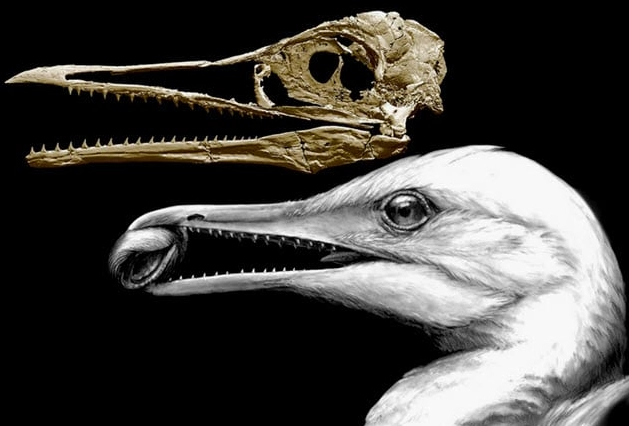
Birds are essentially dinosaurs, though tracing their gradual, piecemeal transition poses significant challenges. A key discovery from this complex era is Ichthyornis dispar, a "stem bird" that bridges the dinosaur-bird divide. Living in the inland sea that once covered Kansas 100 million years ago, it possessed a bird-like pincer beak but retained dinosaurian teeth and a powerful jaw, enabling it to snatch fish and crush them efficiently.
Beyond its unique anatomy, I. dispar also had a surprisingly large brain. This finding challenges hypotheses that skull expansion and brain growth necessarily require reduced jaw muscles. Its combination of intelligence, powerful jaws, and adaptability likely contributed to the evolutionary success of its lineage, highlighting a crucial phase in the rise of modern birds.
9. The 1,000-Kilogram (2,200 lb) Guinea Pig That Stabbed Enemies With Its Massive Tusks
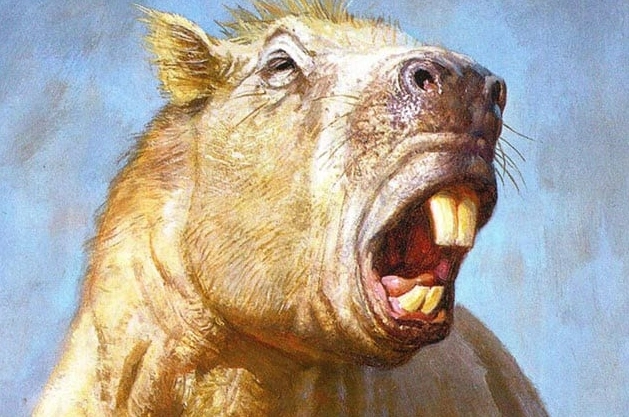
Three million years ago, the rodent Josephoartigasia monesi roamed Uruguay weighing about 1,000 kg—comparable to a bull. Its most striking features were its enormous front teeth, which resembled tusks more than typical rodent incisors and measured about 30 cm in length. Scientists went beyond mere observation, using CT scans and computer simulations to analyze its bite. They discovered it could deliver a force similar to a tiger’s bite, yet its teeth could withstand three times that pressure.
This remarkable strength suggests the incisors were used for more than biting. Researchers believe J. monesi employed its tusk-like teeth for activities like rooting in the ground, digging for food, and possibly even goring threats—much like an elephant uses its tusks. This combination of power and versatility makes the creature, a distant relative of the modern guinea pig, an exceptionally impressive prehistoric giant.
8. The Amazing Pig-Nosed Turtle
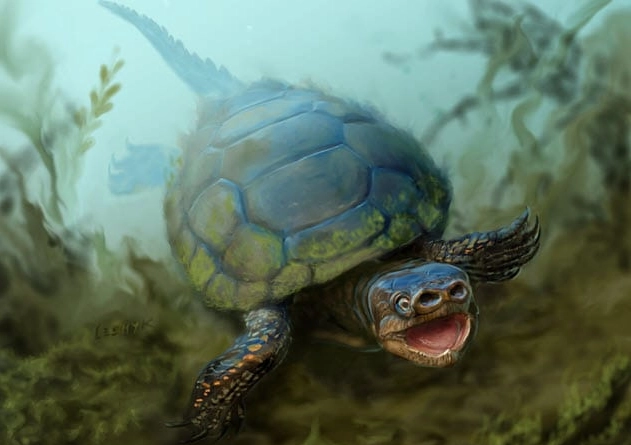
Turtles are among Earth’s oldest creatures, having existed for over 250 million years. Nature largely kept a conservative design for prehistoric turtles—with one notable exception. About 76 million years ago, a quirky, pig-nosed turtle named Arvinachelys goldeni appeared in what is now Utah. Back then, North America was the island continent Laramidia, and Utah was covered in hot, humid swamps and waterways where this unusual turtle thrived.
The discovery of A. goldeni deepens an evolutionary puzzle from Laramidia. Creatures from its northern and southern regions looked surprisingly different, even without obvious geographic barriers. The appearance of this pig-snouted turtle did not solve the mystery; instead, it highlighted unexpected diversity and differentiation among species isolated on the same ancient landmass.
7. The Pug-Faced Mega-Hyena
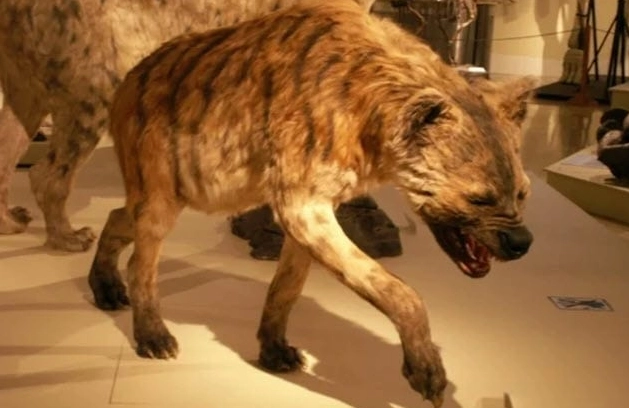
Pachycrocuta brevirostris, known as the short-faced hyena, was the most formidable hyena to ever exist. Despite its compact, lion-sized body built for scavenging, its powerful jaws and stout limbs allowed it to dominate carcasses. It could efficiently tear meat from large prey and retreat safely to consume it. Emerging in Africa and Asia around three million years ago, it later expanded into Europe.
Its reign, however, overlapped with human migrations. Evidence, such as mangled Homo erectus remains from China’s Dragon Bone Hill, indicates that early humans and P. brevirostris shared habitats—a coexistence that proved dangerous for our ancestors.
6. The Dolphin That Thought It Was A Swordfish
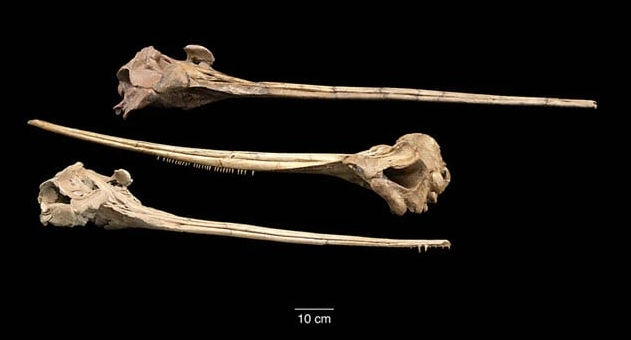
Throughout Earth's history, many bizarre creatures have emerged and vanished with the warming and cooling of the oceans. One of the strangest was the prehistoric dolphin Zarhachis flagellator, which attacked prey using its sword-like snout much like a swordfish. Appearing 20 million years ago, it possessed the longest snout of any known mammal—over one meter long, which it used to sweep through water and clobber its prey.
Scientific analysis of the snout's structure reveals it could withstand significant force, similar to modern marlins. However, this unique predator was driven to extinction around 2.5 million years ago. A severe glaciation at the start of the Pliocene epoch altered its habitat and food sources, ending the reign of these extraordinary long-snouted dolphins.
5. The Cold-Blooded Goat
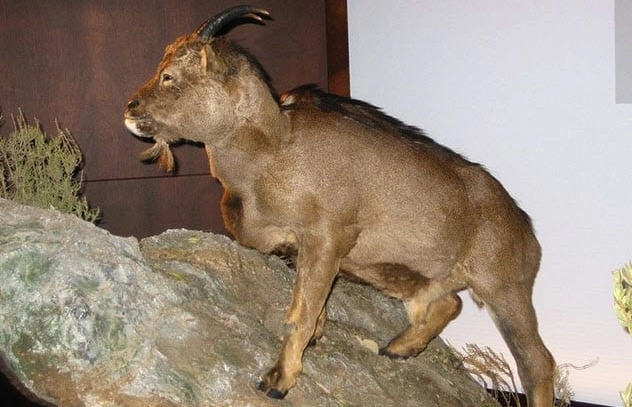
Myotragus balearicus, a dwarf goat from the Balearic Islands, survived for millions of years by evolving a cold-blooded metabolism akin to reptiles. Scientists discovered tree-like growth rings in its bones—a trait absent in warm-blooded animals but common in cold-blooded ones, which grow bones in spurts when resources permit. This adaptation allowed the goat to conserve energy on the barren island of Majorca, basking in the sun with minimal need for food.
Yet, this slow, energy-saving lifestyle had consequences: the goat became small, weak, and incapable of fleeing or fighting predators. Fortunately, it faced no natural threats on its isolated island, thriving for 5.2 million years—twice the average lifespan of a mammal species. However, Myotragus balearicus met its end around 3,000 years ago when humans arrived, abruptly ending its long reign.
4. The Walking Crocodilian
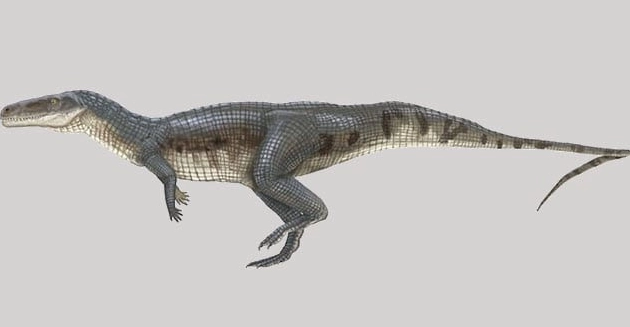
Dinosaur lore is full of mysteries, such as how dinosaurs outlasted competitors like the rauisuchians. These creatures walked on straight, upright legs, which made quadrupedal movement faster and more efficient. Yet dinosaurs were once thought to hold an advantage thanks to bipedalism—a faster, more efficient form of locomotion. However, discoveries like Poposaurus gracilis show that some rauisuchians also walked on two legs, reigniting the puzzle of dinosaur dominance.
The 225-million-year-old P. gracilis was around 4 meters long, with small arms and a long, tapered tail that enabled it to walk and run upright. Its anatomy parallels that of early dinosaurs, challenging the idea that bipedalism alone ensured dinosaur survival. This finding renews the question: if not locomotion, what truly allowed dinosaurs to thrive while their Triassic rivals perished?
3. The Ferociously Vegetarian Cave Bear
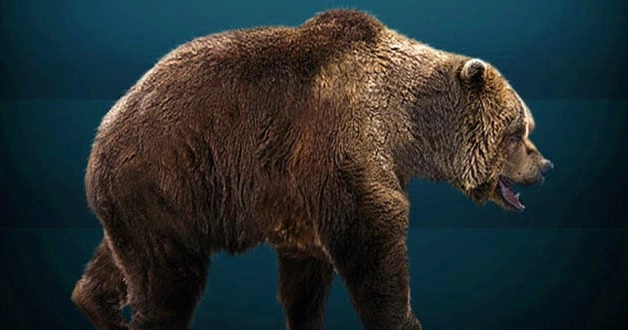
The European cave bear, a prehistoric species weighing up to 500 kg and reaching 3.5 meters in length, roamed Europe and Asia until its extinction around 25,000 years ago. Unlike modern omnivorous bears, it was exclusively herbivorous, sustaining its massive frame on vegetation even during the cold, dry Last Glacial Maximum.
Scientists determined its diet by analyzing bone collagen from six Romanian cave bears dating back nearly 50,000 years. By comparing nitrogen ratios in the collagen with those of European carnivores and herbivores, researchers confirmed that Ursus spelaeus was a strict vegetarian.
2. The Armored Basking Fish
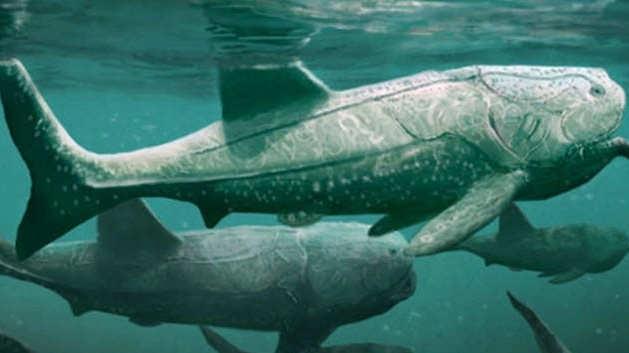
The armored fish Titanichthys was among the largest Devonian sea creatures, reaching over 5 meters in length with a 1-meter jaw. However, its jaw was surprisingly weak, toothless, and lacked a cutting edge—clearly not adapted for combat or tearing prey.
Instead, this formidable-looking fish was a gentle suspension feeder. It used a method called continuous ram feeding, floating with its mouth open to filter small organisms from the ancient sea—now Morocco's Sahara Desert. As the earliest known example of this strategy, Titanichthys predated basking sharks and baleen whales by about 350 million years.
1. The Anchovy With A Sabertooth
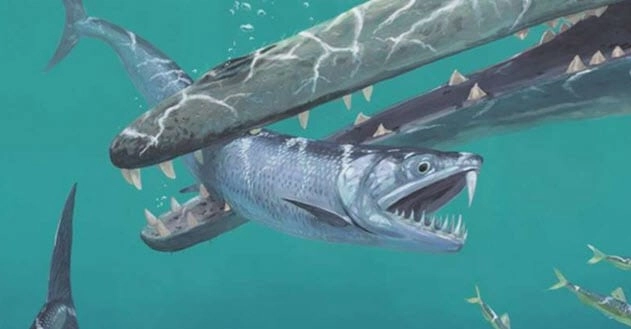
Fossils often remain in museums for decades before being studied. Two such specimens, after 20 years on a shelf, recently revealed that anchovies were not always small plankton-eaters. The prehistoric Monosmilus chureloides, dating back 45 million years to the Eocene Epoch, grew up to 1 meter long and was a formidable predator.
This ancient anchovy possessed a unique sabertooth in its upper jaw, used to impale prey, along with sharp lower fangs. Its evolution into a ferocious fish occurred during the Paleogene, after the asteroid impact 66 million years ago wiped out larger marine predators. This event created ecological opportunities, leading many fish, including M. chureloides, to become ruthless hunters in the reopened niches.